
Understanding Connectors
⚠️ MCP Connectors allow Front’s AI to connect to an external tool. If you’re looking to connect in the opposite direction and allow external AI tools (e.g., Claude, ChatGPT) to connect to Front, follow the steps for Front’s MCP server.
Overview
Connectors let Front integrate with the outside tools your team already uses, so you can bring their data and actions right inside Front. A Connector is one connection to a third-party system: once it's set up, Front can read information from that system and make changes in it.
There are three types of Connectors, based on how Front connects to the tool:
Application requests: Call a tool's API to fetch data or take an action, like looking up an order or updating a record.
Application objects: Pull a specific record from a tool (an order, a shipment, a ticket) into the conversation and keep it in sync.
MCP Connectors: Connect to a tool's own set of actions (its MCP server) so Front's AI can use them directly.
You use Connectors in two places:
In your workflows — rules, macros, and chatbots run a Connector at set points, in a set order.
With Front's AI — Copilot, Autopilot, and AI steps in your workflows can use a Connector on their own, deciding when to call it as they work.
Application requests and application objects work in both your workflows and with Front’s AI. MCP connections are used by Front's AI.
Types of Connectors
Application objects
Application objects are a simple way to get information from a third-party system and display it as a comment or link inside a Front conversation.
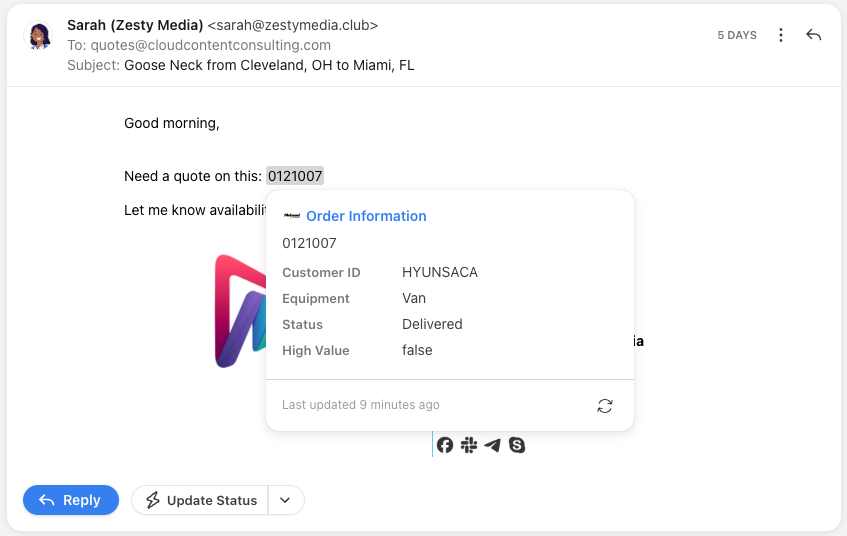
For example, if a customer is writing in to your support team to ask about a specific order, Front can detect the order ID in conversation messages or comments and automatically attach a link to the order object in your external system. The application object is added to the message, and you can click on the text pattern to display the information:
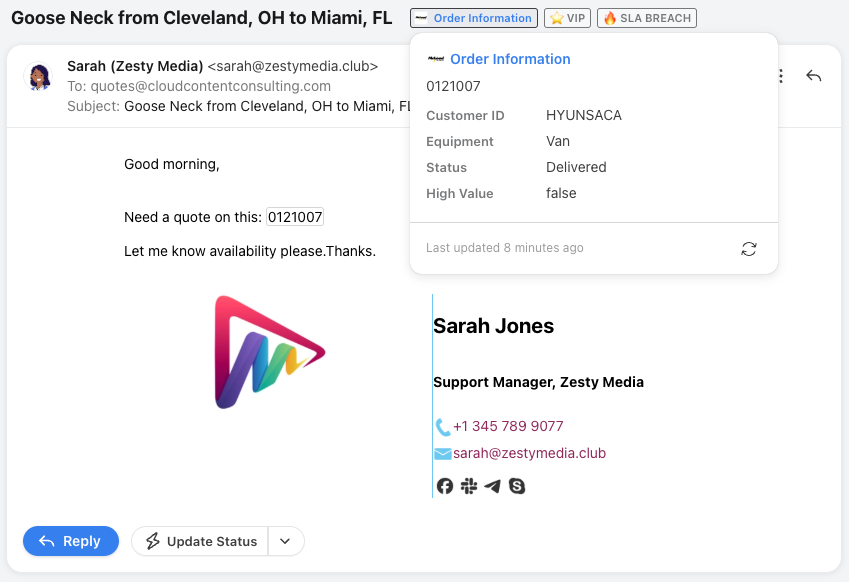
The application object also displays at the top of the conversation:
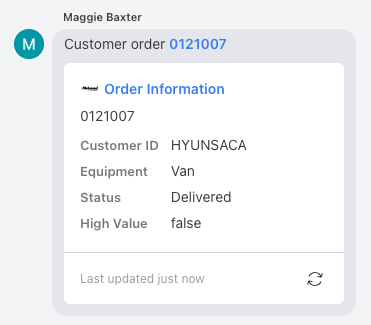
Front can also display information about the order inline with the conversation in the form of a comment:
You can create application objects for anything that has an established pattern to its identifier (such as an ID, URL, etc.) and a public API to return information about the object. Once you create a Connector with an application object, you can specify when it should trigger and to what inboxes it should apply to via a rule.
Common use cases
Tracking an order or shipment
Showing the status of a bug or issue
Viewing a customer’s account information
Application requests
Application requests offer you the ability to make an API request directly from Front. API requests are a way for different software applications to communicate with each other. In the context of Front, application requests allow you to trigger actions in third-party systems, such as creating a new order, updating a customer record, or sending a notification.
For example, imagine your company uses an e-commerce platform like Shopify. You could configure an application request to allow your support team to cancel a customer's order directly from within Front. Instead of having to switch to Shopify and manually find the order, an agent could trigger a "Cancel Order" application request. This request would send the necessary information (like the order ID) to Shopify's API, initiating the cancellation process without the agent ever leaving Front. This saves time, reduces the potential for errors, and provides a smoother experience for both your team and your customers.
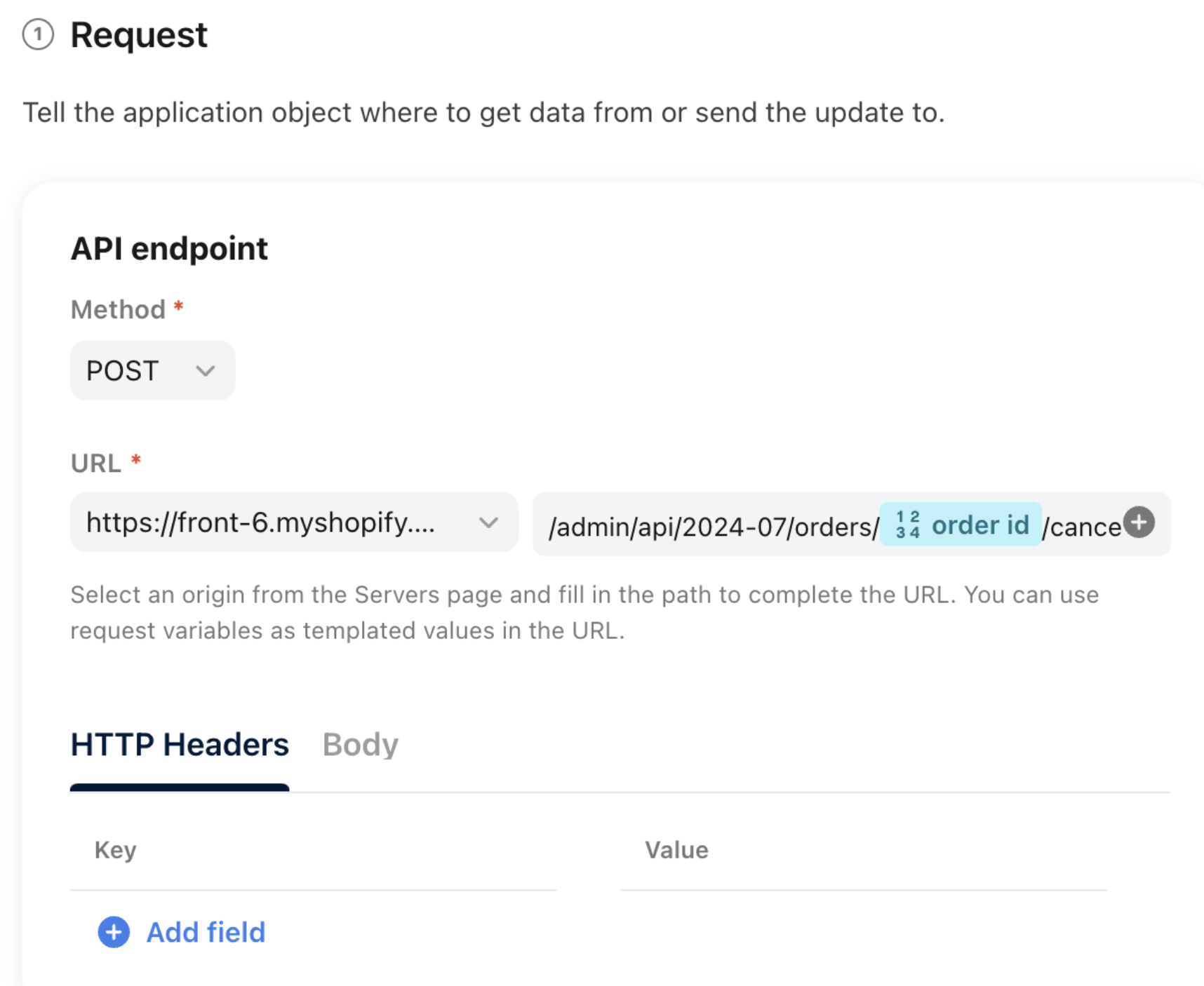
You could also use application requests to allow Front teammates to execute actions in external systems via a macro. For example, a teammate could cancel a customer’s order without having to switch to your order management system to do so.
Common use cases
Updating or canceling orders in an e-commerce platform
Updating a CRM based on customer interactions
Updating bug statuses in a project management system
MCP Connectors
An MCP Connector links Front to a tool's own set of actions, so Front's AI can use them directly, with no custom building. MCP (Model Context Protocol) is an open standard that tools use to publish what they're able to do. When a tool supports it, Front connects to that published set of actions, rather than you configuring each API call yourself.
What sets MCP Connectors apart from application requests and objects is who decides when to act. With a rule or macro, you specify the trigger and the order of operations ahead of time. With an MCP Connector, Front's AI decides in the moment whether an action is needed, which one fits, and what to do with the result.
For example, imagine a customer writes in asking why they were charged twice this month. With a Stripe MCP Connector enabled, Front Autopilot agents can look up that customer's payment history, identify the duplicate charge, issue a refund, and reply explaining what happened. No rule had to tell it to check Stripe, and nobody on your team had to open the Stripe dashboard. If that same customer later asks about an unrelated invoice, the AI uses the same Connector differently, because it chooses the action that fits the question.
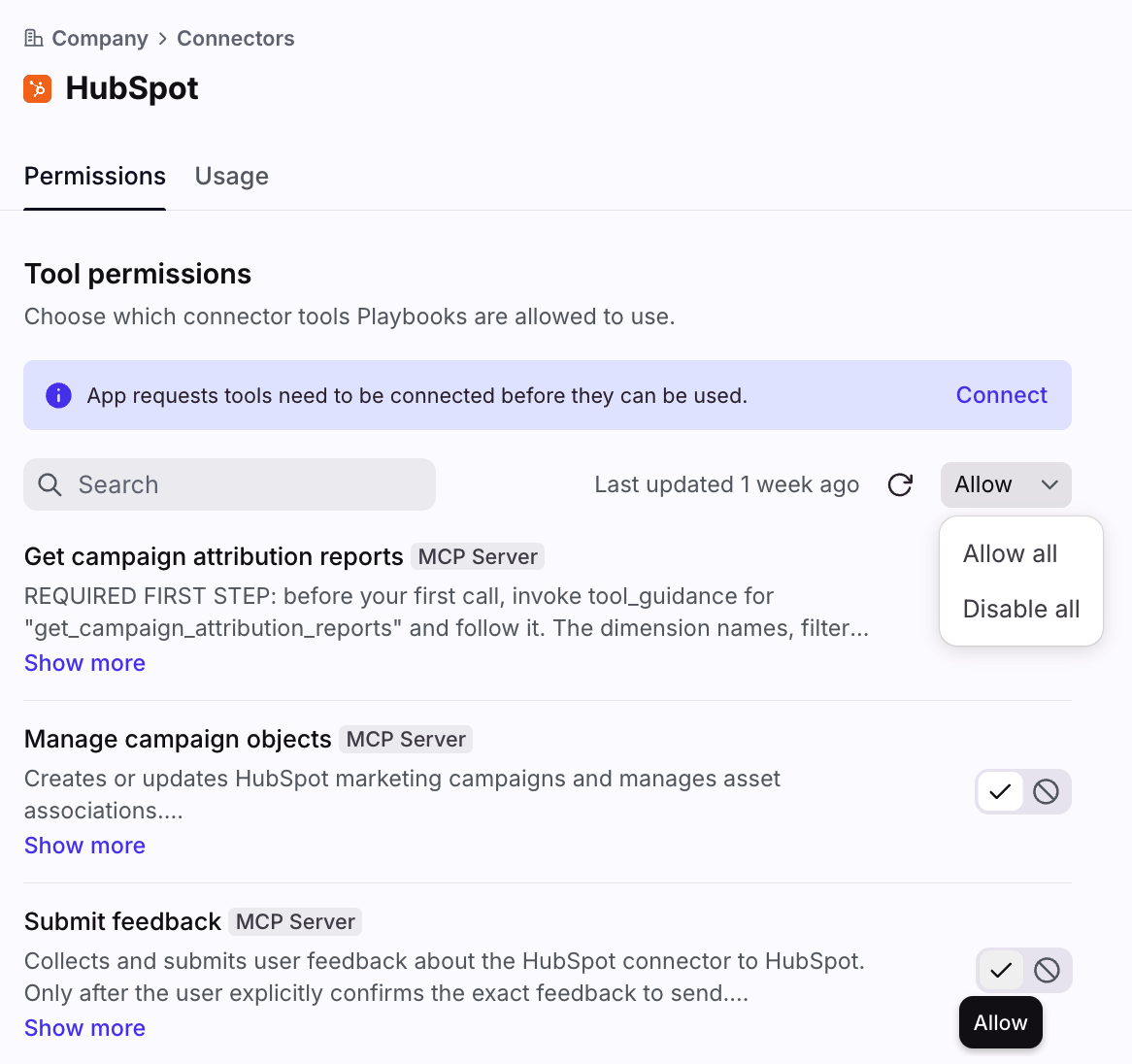
You stay in control of what's possible. Every action a Connector offers is turned off by default, so Front's AI can only do what you've explicitly enabled, and you choose which AI features are allowed to use it. Turning an action off takes effect immediately.
Common use cases
Let Front's AI look up and update your CRM
Pull answers from your documentation
Take actions in external tools, like Stripe or Jira
Prebuilt and custom Connectors
Prebuilt and custom Connectors function identically in practice. The key difference is whether Front created the integration, or if it was custom built by your team.
Prebuilt Connectors
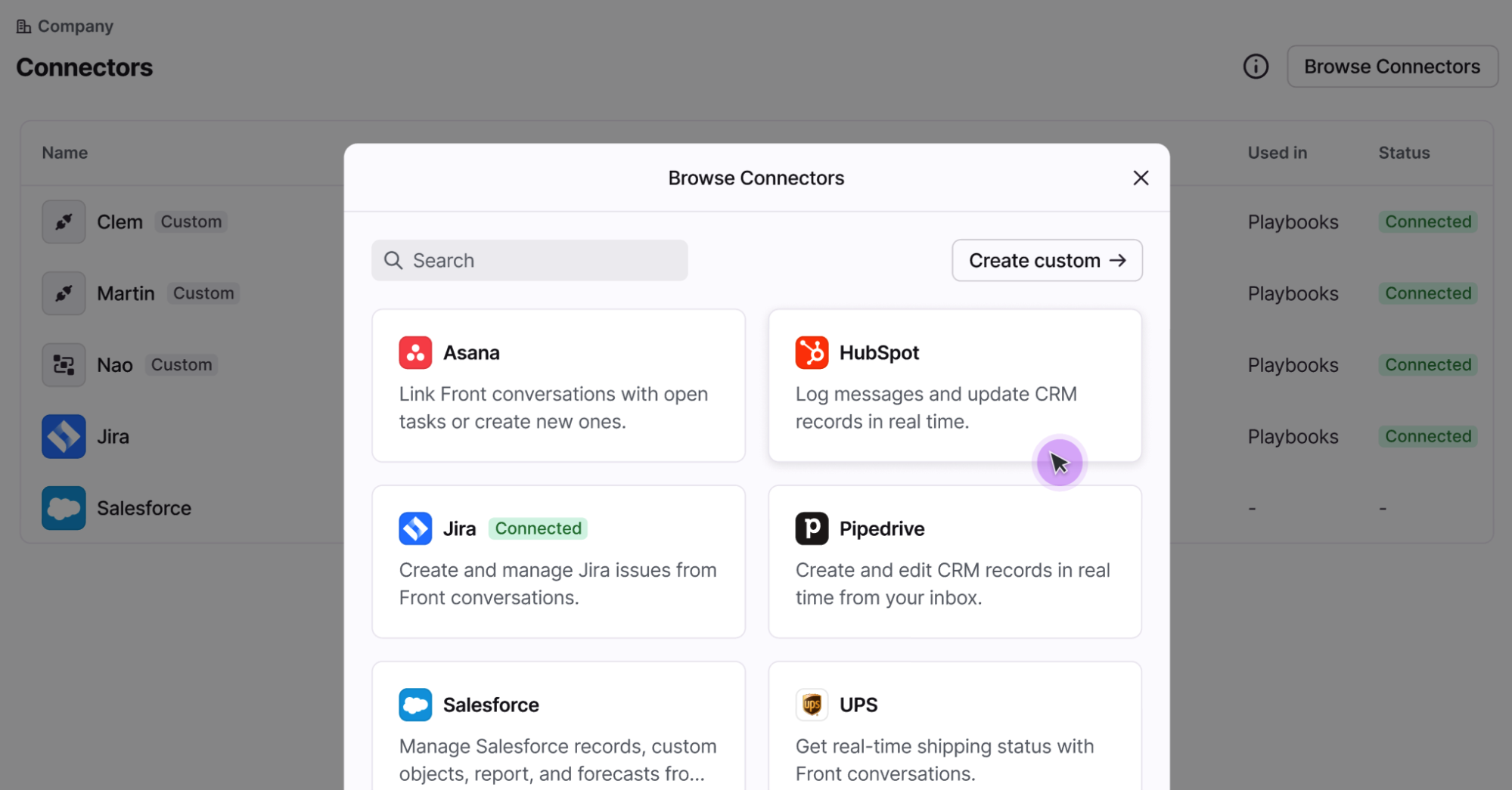
Want to tap into the power of Connectors right away? Front offers a growing library of prebuilt Connectors for popular tools, allowing you to integrate them with just a few clicks!
These prebuilt Connectors are a fantastic way to experience the immediate benefits of integrations and see how connecting your systems with Front can simplify your workflows.
See this article to learn more.
Custom Connectors
Build your own application request or application object, or connect your own MCP server in Developer settings.
Managing Connectors
Connectors settings
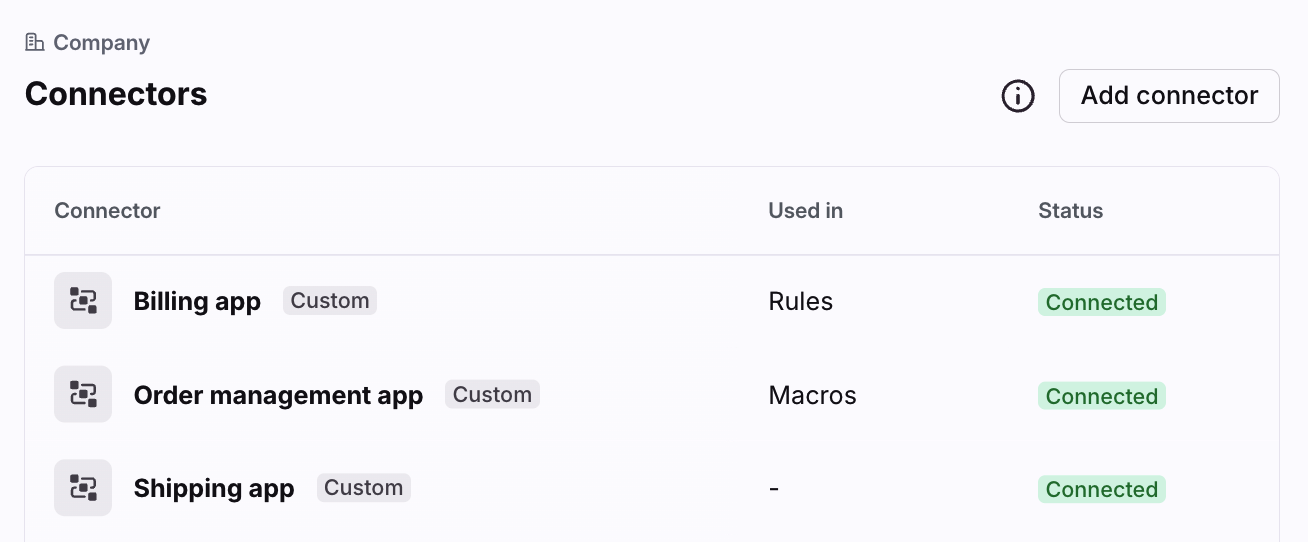
Company admins manage Connectors in Connectors section in company settings. This is where you can:
Browse available Connectors and see a short description of what each one does before connecting.
Connect a new tool, and see its status once connected.
Choose which of a Connector's actions are turned on, and which features can use it.
Check connection health, reconnect if access expires, or disconnect a tool you no longer use.
Custom-built Connectors configured in Developer settings are managed there for now; they'll move into the Connectors section in a future update.
Configuring workflows
Once you configure a Connector – whether an application request, application object, or MCP Connector – you’ll have to enable a workflow in Front to take advantage of your Connector. Otherwise, your Connector is simply a configuration in your developer settings that doesn’t take any effect.
Your options to enable application requests include:
Rules: Specify the triggers for your application request (or, application object). For example, if a conversation is moved to a specific inbox in Front, you might want to run an application request that changes the status of an object in an external system.
Macros: Execute an application request as a result of a Front user running a macro. For example, a Front user can click on your macro to create a new item in your external system based on a customer conversation.
Chatbots: Leverage the power of Front chatbots to automatically trigger application requests based on customer input or conversation flow. This allows you to automate actions in external systems based on chatbot interactions, like looking up a customer’s order status.
Others: In the future, Front may include additional methods for enabling application requests as Connectors become more embedded within Front workflows.
More resources
See our developer documentation for additional details.
Take a Front Academy course here to learn more about how Connectors work.
Have questions or want to view examples? Visit our Connectors community space to:
Subscribe to our examples forum.
Join our Connectors group.
Pricing
Connectors are available across plans, with varying access:
MCP Connectors (used by Front's AI) are available on all plans. To use one, you must have access to a Front AI feature such as Copilot or Autopilot.
Prebuilt Connectors from Front’s app store are available on the Professional plan or above.
Custom application objects are available on the Professional plan or above.
Custom application requests are available on the Enterprise plan, or with the Autopilot add-on.
Dynamic variables in a Connector's requests are available on the Enterprise plan, or with the Autopilot add-on.