
Audit log
Overview
The audit log allows company admins to track changes made to your Front account settings and resources. You can see who made changes, what changes were made, and when the events took place. This improves transparency, accountability, and makes delegating admin tasks safer.
How it works
What the audit log tracks
The audit log records changes to the following Front resources:
Accounts: Creation, deletion, or changes to account records
Company preferences: Changes to all company settings
Contacts: Creation, deletion, or changes to contact records
Conversations: Conversations deleted via the API
Custom fields: Creation, deletion, or changes to custom field settings
Inboxes: Creation, deletion, or changes to settings in a shared inbox
Lists: Creation, deletion, or changes to shared and workspace contact lists
Message templates: Creation, deletion, or changes to shared message template content and settings
Rules: Creation, deletion, or changes to workspace and company linear/branching rules, rule sets, and dynamic variables
Signatures: Creation, deletion, or changes to shared signature content and settings
Tags: Creation, deletion, or changes to workspace and company tags
Teammate groups: Creation, deletion, or changes to name, description, members, or preferences of a teammate group
Teammates: Creation, deletion, or changes to teammate information and preferences
Workspaces: Creation, deletion, or changes to workspace settings
Log sources
The audit log tracks actions from several sources:
Admin Copilot: Any change made using Admin Copilot
API: Any change made by using Front’s API
Applications: Any change made through a third-party app
Identity providers: Any change made by an identity provider (SCIM)
Teammates: Any change made by another teammate within Front
Instructions
You must have company admin permissions to access the audit log.
Step 1
Click the gear icon, select company settings in the left sidebar, then select Audit log.
Step 2
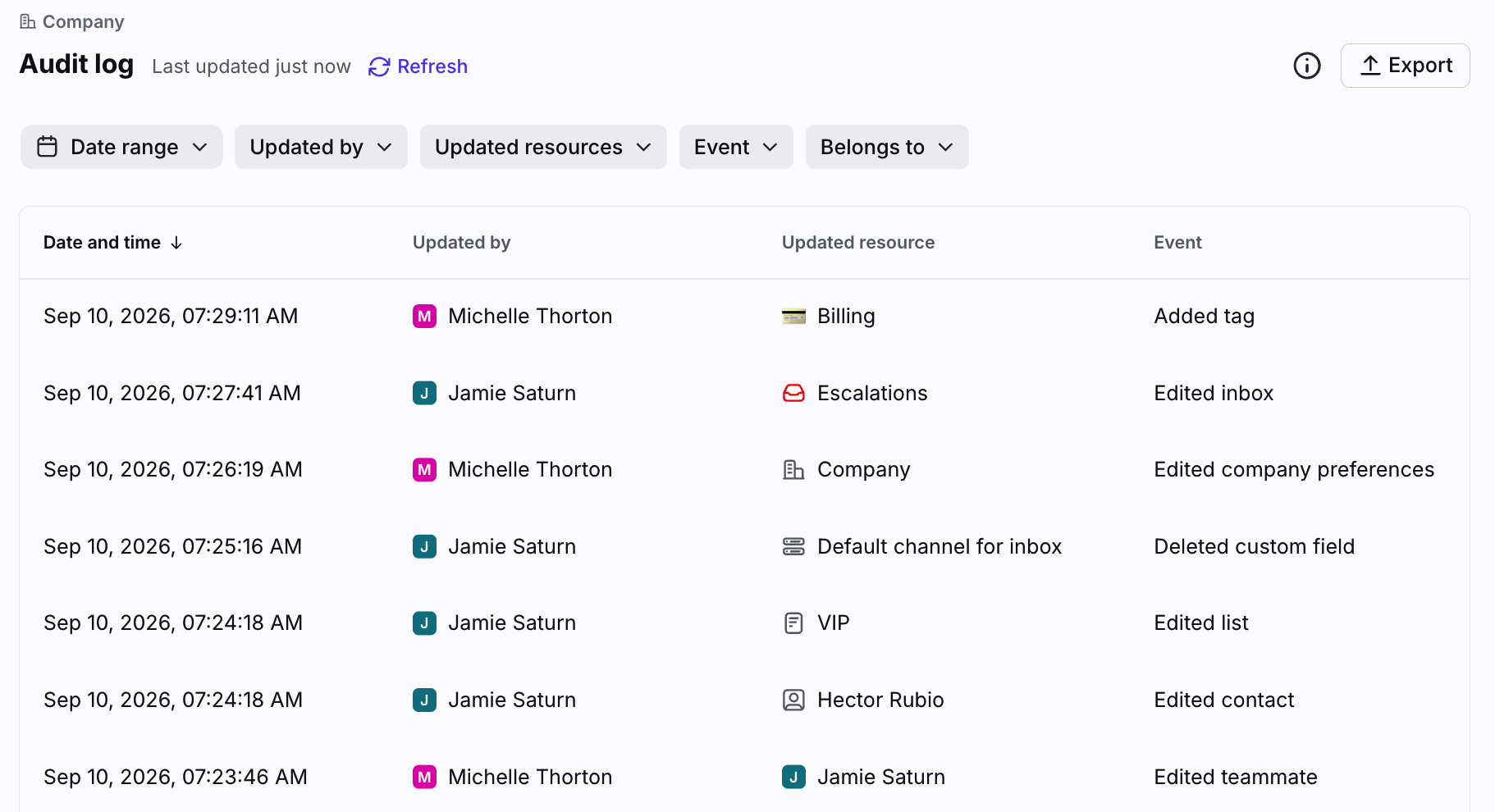
You’ll see a table with events tracked by the audit log. For each event you’ll see:
Date and time: When the change happened
Updated by: The teammate or system that made the change
Updated resource: The specific resource that was changed
Event: The type of change (Created, Edited, or Deleted)
Step 3
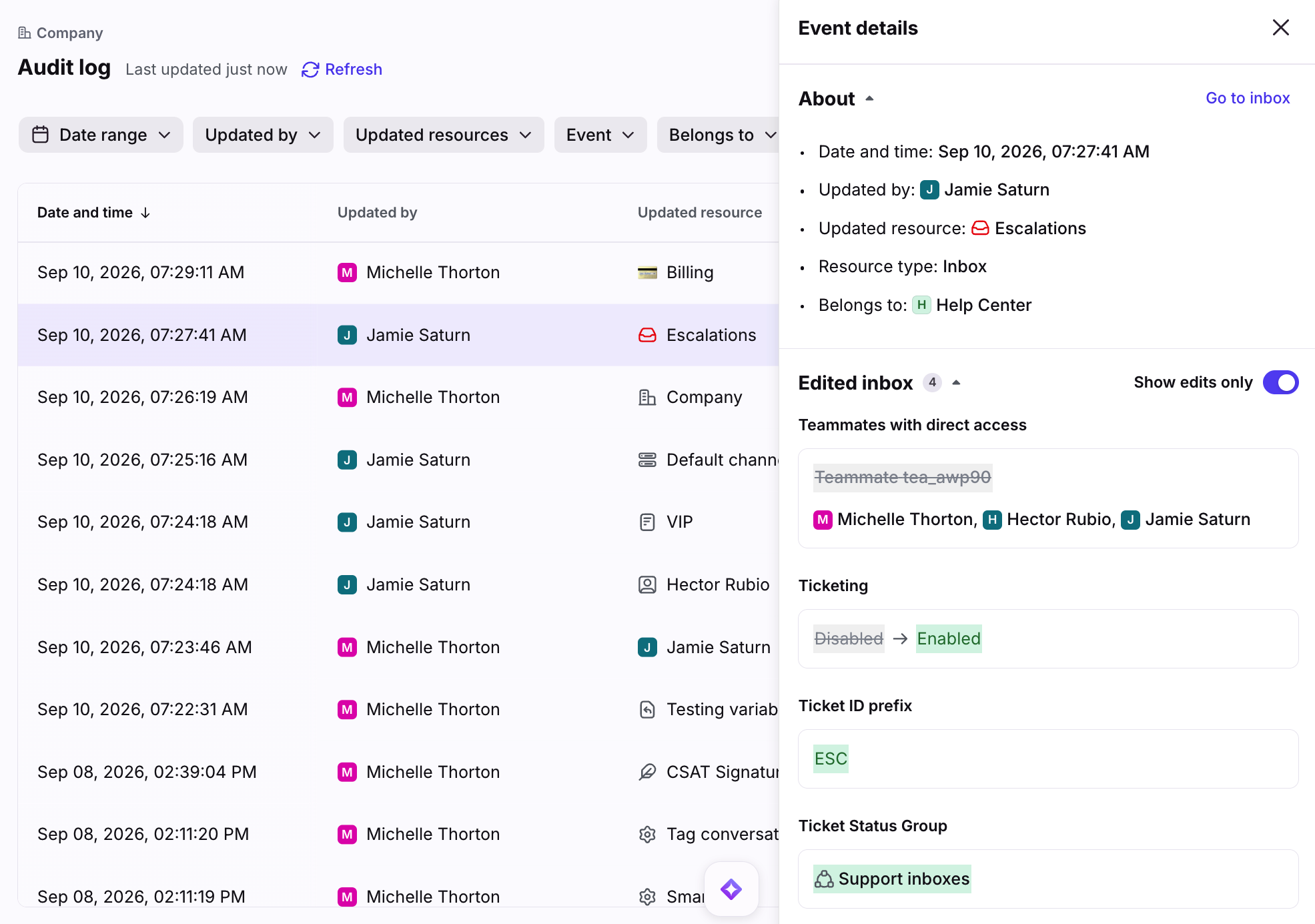
Select any event to open a side panel with the full details. Toggle on the Show edits only setting to focus on edits made to the resource.
Step 4
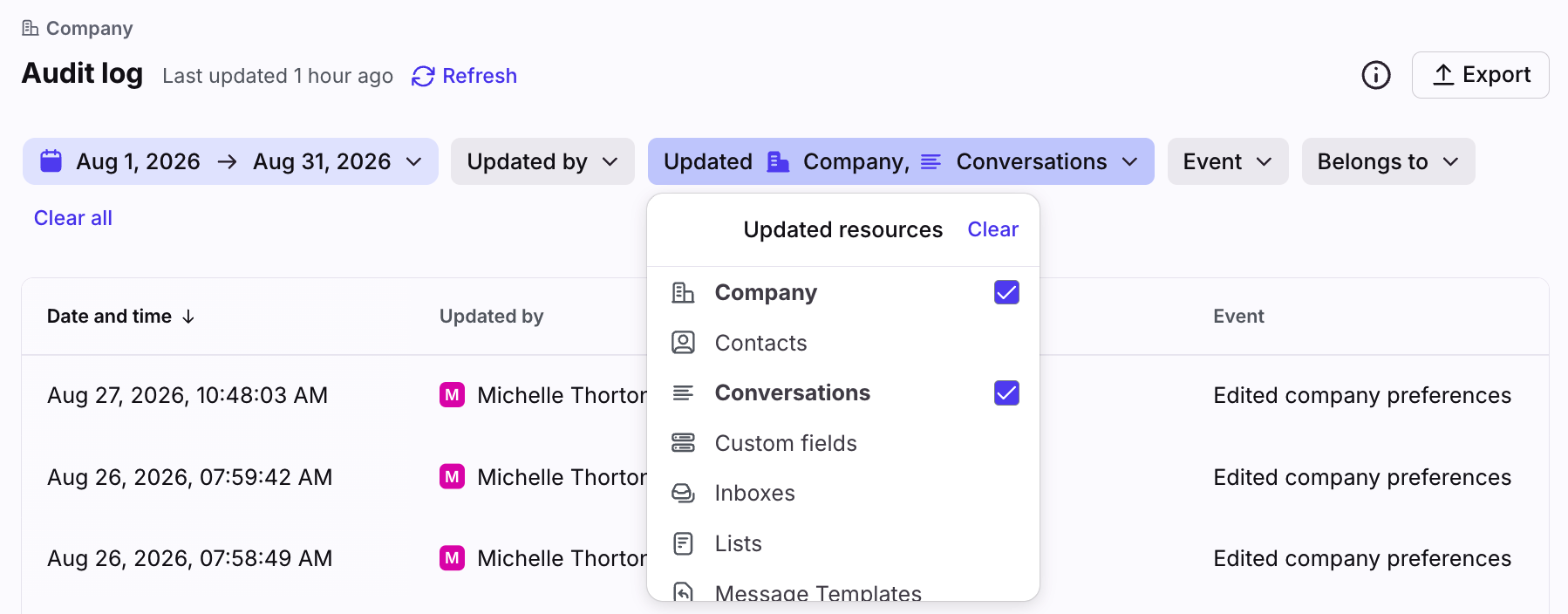
Use the filters at the top to focus on specific resources, events, and more.
Step 5
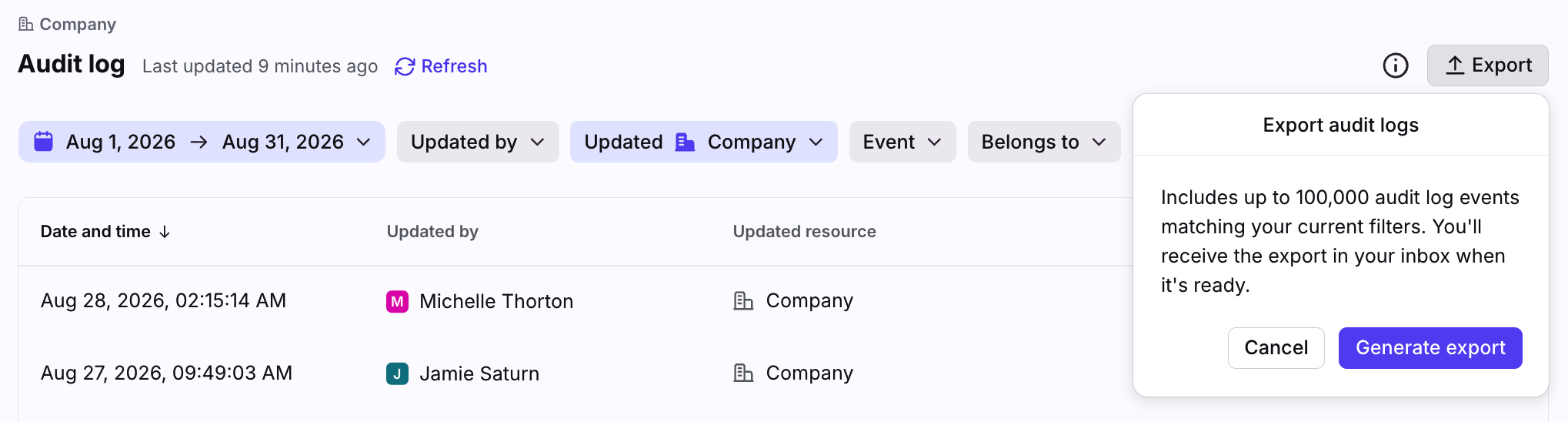
To download your audit log data, click Export at the top, then click Generate export. The export takes all filters into account.
Step 6
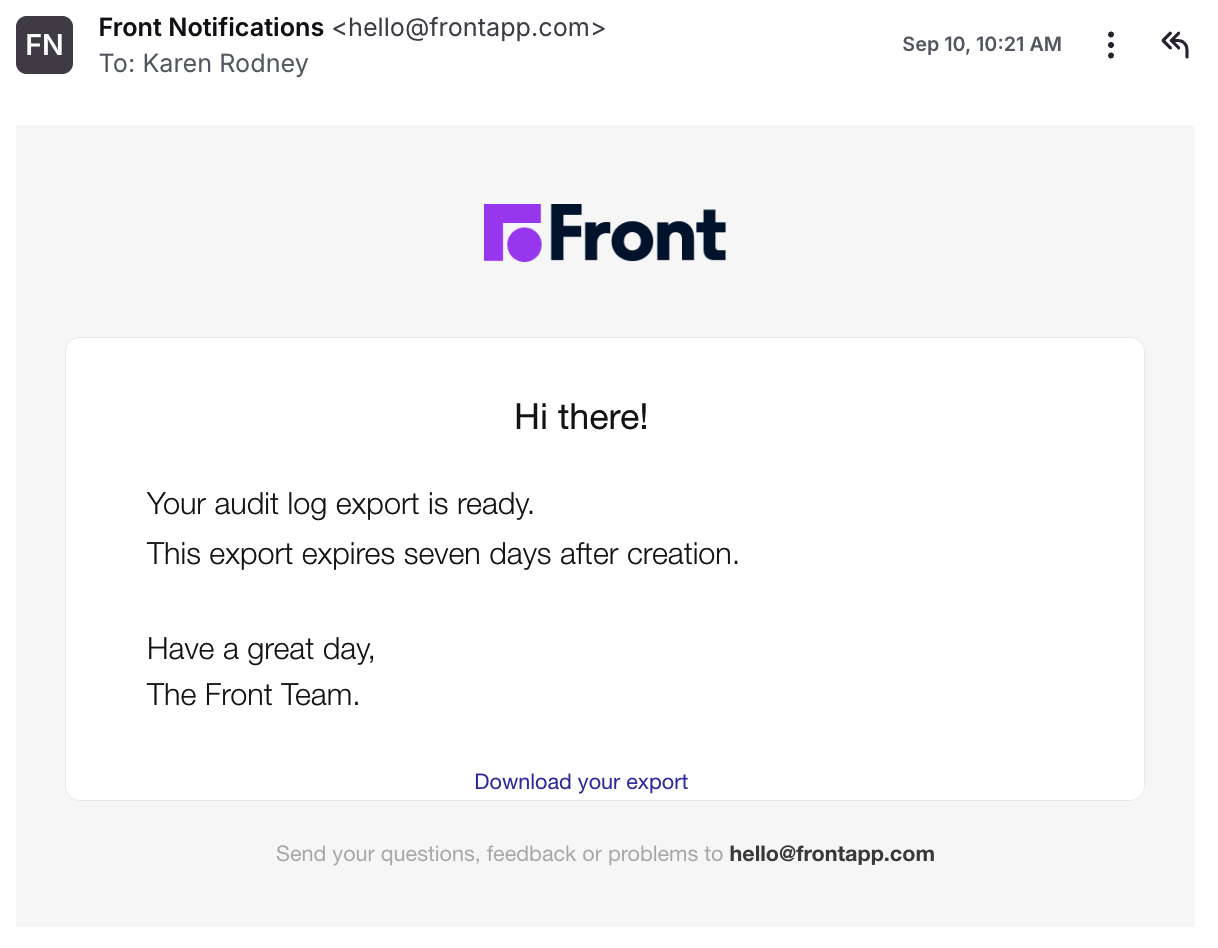
The export will run in the background, allowing you to navigate away from the page while the file generates. Once finished you'll receive an automated email with a download link that expires in 7 days. You may also see a pop-up at the bottom of the screen to download the file.
Example email:
FAQ
Who can access the audit log?
Only company admins can view and export data in the audit log.
How often does the audit log update?
All changes are immediately available in the audit log. Reload the page to view the latest events.
How far back do the logs go?
You can view logs for the past 365 days, up until the release date of this feature (Mar 2025).
Can I export logs for multiple resources at once?
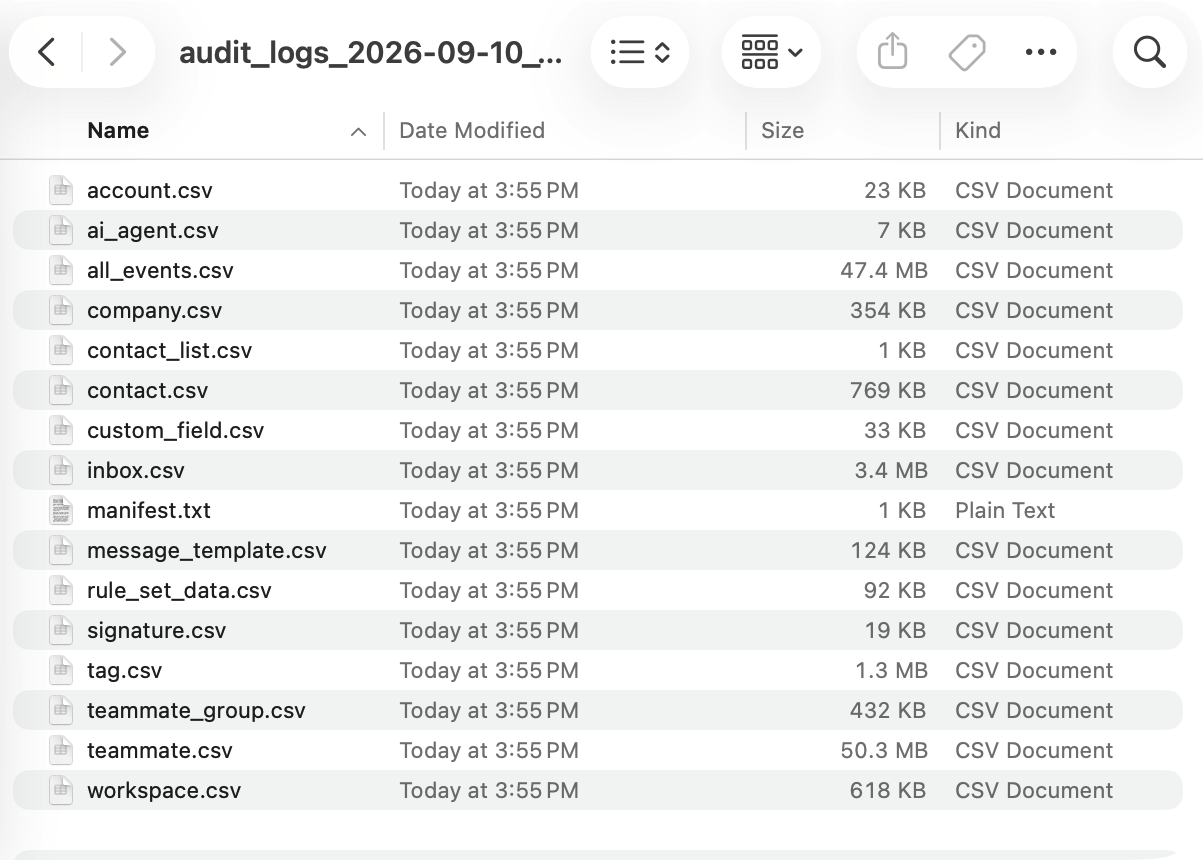
Yes. The export output is a .zip containing a manifest, one master CSV with all events, and one CSV per resource type included in your filters.
How many rows can I export?
You can export up to 100k rows in your CSV file.
Does the export take all filters into account?
Yes. The file will contain all changes (up to 100k rows) and takes filters into account.
Are there export rate limits?
Yes. Each admin can request up to 10 exports every 10 minutes. Additionally, only one export can run at a time per company, so if a colleague has an export in progress, you'll need to wait for it to finish before starting your own.
Are there any audit log limitations for contacts/accounts?
The audit log does not currently support contacts and accounts synced in batch from a CRM (HubSpot, Salesforce). However, CRM syncs done one by one are included in the audit log.
Pricing
This feature is available on all plans.